Background
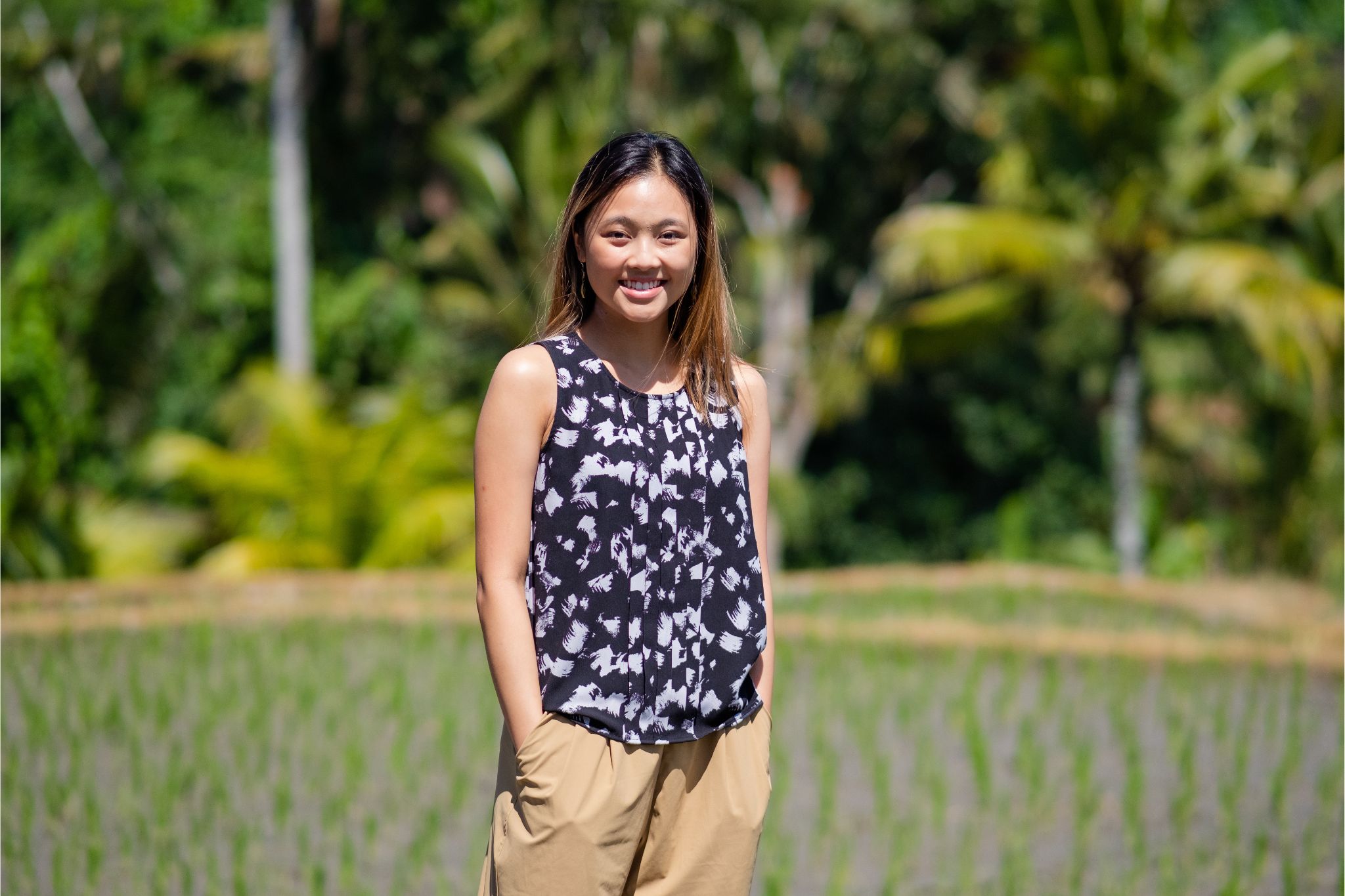
Lavina, a Materials Engineering student at University of California, Los Angeles (UCLA), joined the Start Me Up internship program in Bali as an upcoming sophomore. With a foundation in first-year chemistry and materials science, she was eager to explore what engineering looked like beyond Silicon Valley and large tech firms.
Instead, she found herself applying materials science in rural Indonesia — working on low-cost technologies designed to improve livelihoods and reduce waste.
“I didn’t know what engineering looked like in Bali. All I associated engineering with was working at a big tech firm in California. This has been really eye-opening in showing how I can apply my passions to a meaningful cause.”
The Host Organisation: Kopernik
Kopernik is an Indonesia-based nonprofit that uses lean experimentation and low-cost innovation to test practical solutions to social and environmental challenges. Their approach emphasises rapid prototyping, field testing, and adapting technologies to real-world conditions.
Lavina joined the Fab Lab team and quickly became involved in multiple innovation streams.
Project 1: Designing Bio-Based Mulching Mats from Agricultural Waste
The Challenge
Commercial mulching mats — used to suppress weeds and improve crop growth — are difficult and expensive to procure in rural Indonesia due to shipping costs and limited availability.
The Innovation
The team set out to design a locally produced alternative using:
- Coconut husk fibers (a waste by-product)
- Coffee husks
- A biodegradable binder made from sodium alginate (derived from brown seaweed) and calcium chloride
Lavina worked on the biomat, a mulching mat designed to mimic commercial products while using readily available materials.
“We’re utilizing materials like coconut husk that would otherwise go to waste, and experimenting to see if they’re a good alternative to commercial mulching mats.”
Lavina stepped in to:
- Research the molecular interaction between sodium alginate and calcium chloride
- Explain how cross-linking forms a cohesive binder
- Strengthen the scientific rationale behind the material design
- Help structure testing processes to evaluate durability and performance
“I researched how the materials function on a chemical scale and provided an explanation.”
Her engineering lens also shaped how experiments were evaluated:
“As an engineer I’m thinking — is this going to work? Is it delivering results? Others might think more about social impact. We brought together different ways of evaluating effectiveness.”
Project 2: Coffee Waste to Biodegradable Seedling Cups
In a second project, Lavina worked on developing biodegradable cups from coffee bean shells — designed to replace conventional plastic seedling bags used in nurseries.
The concept:
Transform agricultural waste into a functional, compostable product. But her research into bio-based plastics revealed a critical insight:
“At first I thought biobased polymers were great for the environment. But the more I read, the more I realised it’s not that linear — there are a lot of caveats.”
She learned that many “compostable” materials require:
- Industrial composting facilities
- High heat and pressure conditions
- Specific waste management systems
This shifted her understanding of sustainability claims and lifecycle impacts — a valuable perspective for any future materials engineer.
Project 3: Low-Cost Coffee Bean Sorting Technology
Lavina also contributed to testing a coffee bean sorter inspired by stacked mesh systems.
The Problem
Farmers traditionally sort beans by hand — a labour-intensive, back-breaking process.
The Solution
A gravity-based stacked mesh system with different hole sizes that:
- Sorts beans by size when shaken
- Requires no electricity
- Is affordable and locally buildable
“Normally farmers sit for hours sorting beans one by one. We developed a mesh system where you pour in the beans, shake it, and they fall by size through gravity.”
The project exemplified Kopernik’s lean, low-cost innovation ethos — and showed Lavina how engineering can improve livelihoods without high-tech complexity.
Working Beyond the Lab
One of Lavina’s biggest lessons came from field realities.
- When testing the mulching mats:
- Unexpected rain disrupted dry-season assumptions
- Chickens damaged one prototype
- Environmental variables challenged controlled testing
“It’s different from testing in an office. There are environmental and external factors you have to take into account.”
Expanding Career Horizons
Before Bali, Lavina envisioned a traditional engineering career in the private sector. The internship reshaped that outlook.
“I’ve never thought about working at a nonprofit before. But this experience has been really amazing — and I’m open to doing that in the future.”
She also gained exposure to:
- Cross-cultural workplace dynamics
- Interdisciplinary collaboration (economists, biologists, social scientists)
- Generative AI for research synthesis and reporting